Optics for Lever Actions: Irons, Red Dots, Scout Scopes, and Glass That Fits
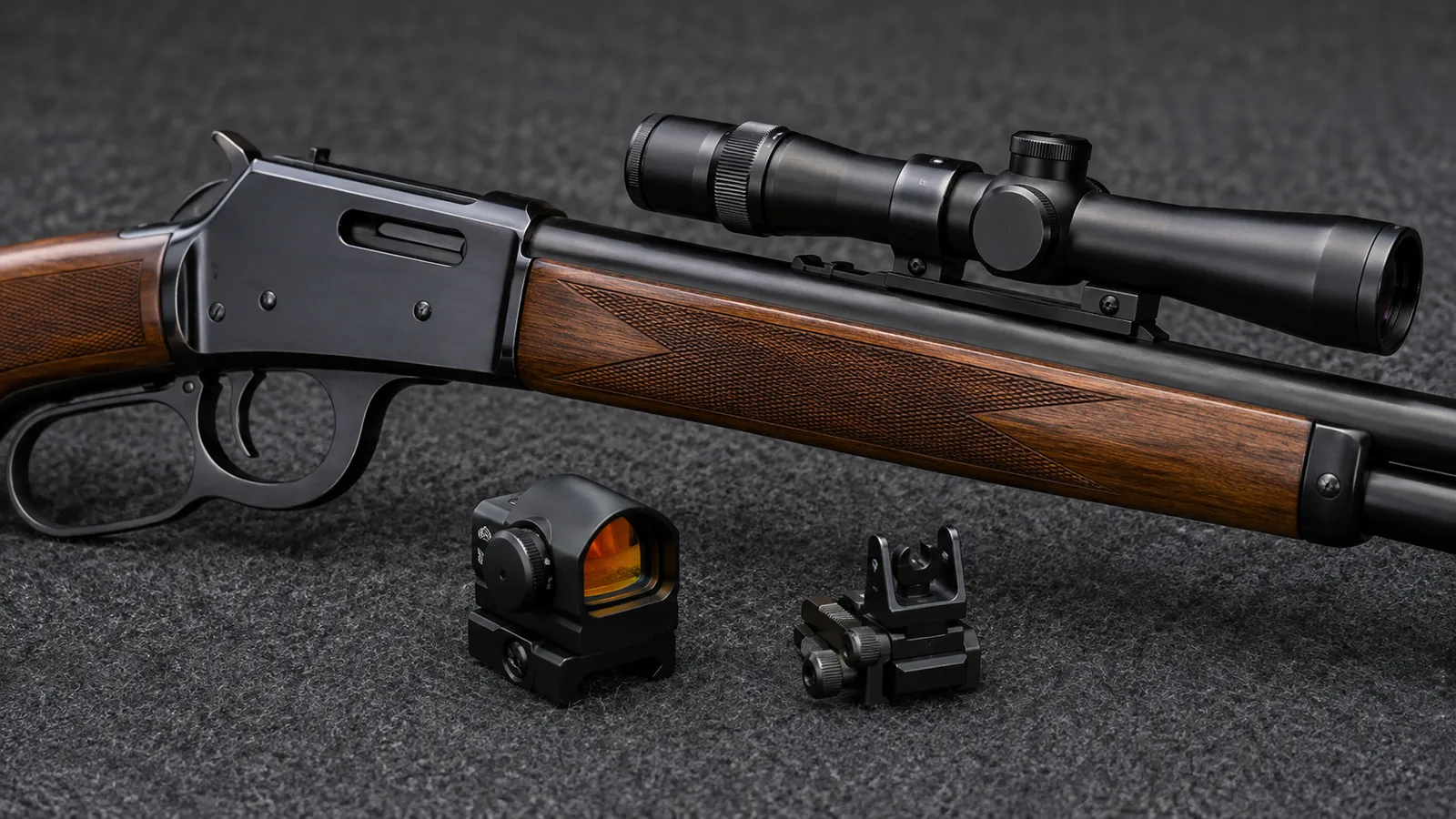
Lever guns predate optics culture by several decades, and it shows: top-eject models throw brass where a scope wants to live, hammers demand clearance, and the whole rifle is built around a fast, heads-up style of shooting that a big hunting scope actively fights. The good news is that every one of those problems has a modern answer. Here are the four that work, in ascending order of glass.
Option One: Better Irons
Before buying an optic, consider that a receiver-mounted peep (aperture) sight transforms most lever guns. The peep moves the rear sight closer to your eye, stretches the sight radius, and lets your eye do the centering automatically. It's faster than buckhorns and dramatically more precise; for a woods rifle inside 100 yards it may be all you ever need. Add a fiber-optic or brass-bead front and you're done for the price of a dinner out.
Option Two: The Red Dot
A small enclosed red dot on a low mount is the modern default for working lever guns — both-eyes-open fast, parallax-forgiving, and weightless in the hands. It shines on home-defense carbines and bear rifles where speed is the whole point. Buy quality (this is not the place for a $40 dot), mount it as low as the hammer allows, and check that you still have hammer clearance for your thumb.
Option Three: The Scout Scope
A long-eye-relief scope mounted forward on the barrel solves top-eject and keeps the receiver clear for gate loading. The forward mount preserves peripheral awareness and snap-shooting speed; the cost is a narrower field of view than a conventional scope of the same power. On classic top-ejecting designs it's the only scope that works; on side-eject rifles it's a taste question. Fixed 2.5x or low-variable scout glass fits the platform's honest ranges perfectly.
Option Four: Conventional Low-Power Glass
Side-eject receivers (all modern Henrys included, and the drilled-and-tapped Long Ranger especially) happily wear a conventional scope. Keep it low and light: a fixed 4x or a 1-4x/2-7x variable balances the rifle instead of ruining it. The Long Ranger with a proper 3-9x is a legitimately different animal — a 300-yard rifle that happens to have a lever. Match the glass to the cartridge's reach and stop; a 24-ounce precision scope on a .30-30 carbine is a category error.
The Quick Answer
| Rifle's job | Fit |
|---|---|
| Woods deer, classic feel | Receiver peep |
| Home defense / bear | Quality red dot, low mount |
| Top-eject or gate-priority | Scout scope |
| Long Ranger / reach | Conventional 2-7x or 3-9x |
Disclosure: LeverGuns.co is reader-supported. When you buy through links on this page we may earn a commission from Ammunition Depot at no cost to you. Pricing and availability change constantly — always confirm current details on the retailer page. Nothing here is legal advice; know your federal, state, and local laws before purchasing any firearm.