Your First Lever Gun: How to Choose One You'll Never Sell
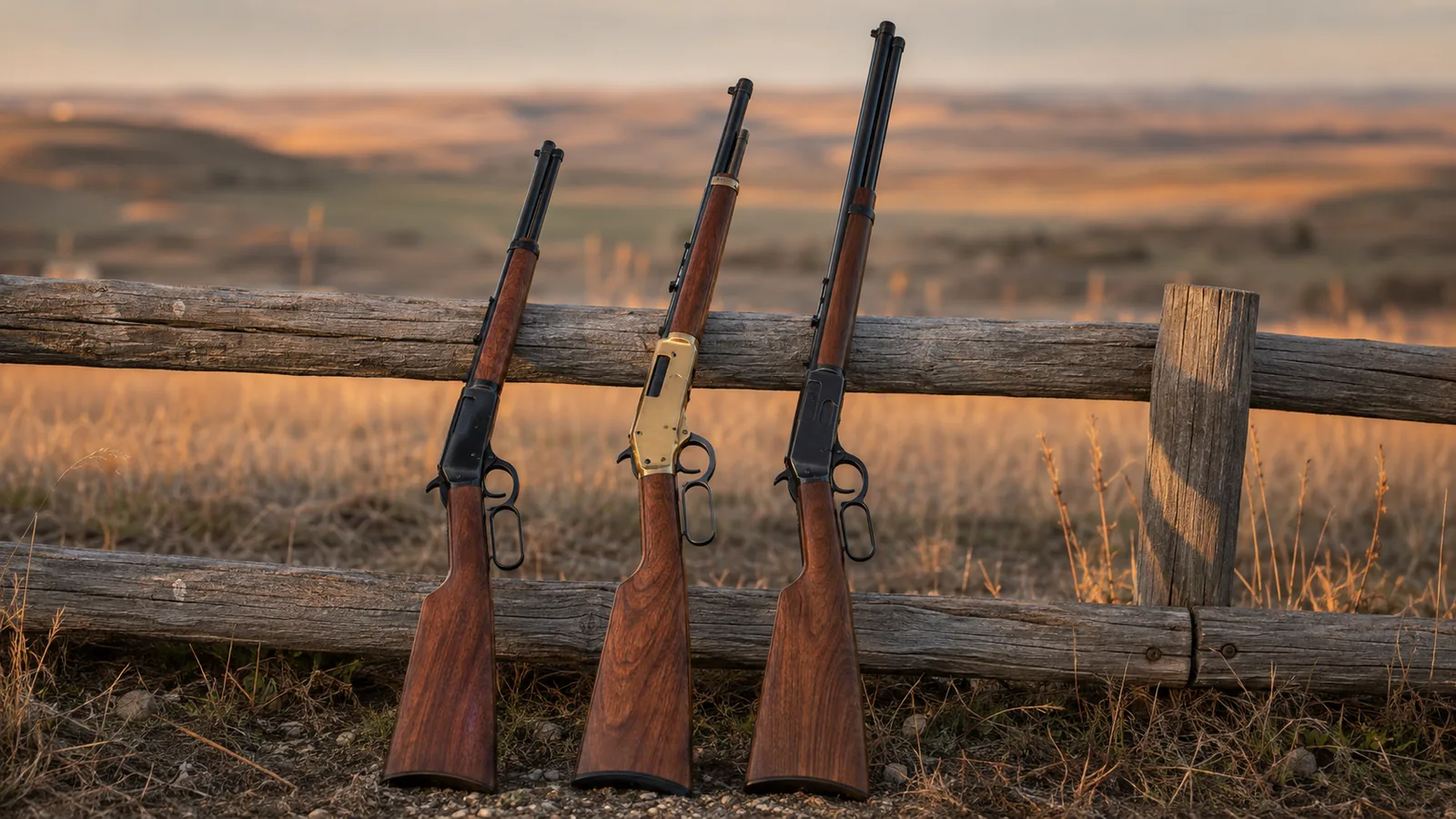
Nobody buys a lever action because a spreadsheet told them to. You buy one because something about the balance of walnut and steel, the arc of the lever, the whole unbroken line back to 1860 gets into your head and won't leave. That's fine. That's the correct reason. But once you've decided you want one, there's a genuinely useful way to think about which one — and it starts with a question most first-time buyers skip.
The One Question That Decides Everything
What will this rifle actually do on a normal Saturday? Not in the fantasy where you're defending a homestead — on a normal Saturday. For most people the honest answer is one of three things: shooting for the joy of it, practicing toward hunting, or serving double duty as a working gun around property. Each answer points at a different rifle.
Answer One: Joy — Get a Rimfire
If the rifle's job is Saturday afternoons, buy a .22. Rimfire ammunition costs a fraction of centerfire, recoil is nonexistent, and you will genuinely shoot it — hundreds of rounds a session — instead of admiring it in the safe. The lever-action .22 is also the finest trigger-time trainer in the sport: every rep of the lever builds the same cycle-and-reacquire rhythm you'd use on a full-size rifle.
The default recommendation here is easy: the Henry Golden Boy. Brass receiver, octagon barrel, real American walnut, and a tube that swallows sixteen rounds of Long Rifle. It's the rifle people hand down.
Answer Two: A Working Rifle — Get a Pistol Caliber
A .357 Magnum carbine is the great sleeper of the lever world. From a rifle-length barrel the .357 picks up enormous velocity over a revolver, turning a good handgun cartridge into a legitimate 100-yard deer cartridge — while .38 Special turns the same rifle into a soft-shooting plinker. One gun, two personalities, and ammunition you can find anywhere.
The Henry Big Boy in .357 with the side loading gate is the modern standard: top-off-able from the gate, unloadable from the tube, and finished like a rifle twice its price.
Answer Three: Hunting First — Get a Full-Power Cartridge
If a deer tag is the whole reason you're here, skip ahead to a .30-30 or .45-70 and read our .30-30 vs .45-70 guide — the short version is that .30-30 reaches further and recoils less, while .45-70 hits like a falling piano inside 150 yards. Either will kill anything in the lower 48 at woods ranges.
What About Used?
Used lever guns can be tremendous value, but tube magazines and lever linkages hide wear that a novice can't spot at a gun counter. For a first rifle, the warranty and known-good condition of a new gun is worth real money. Once you know how a tight action feels, the used market opens up.
The Mistake to Avoid
Don't buy your first lever gun in a caliber you can't afford to feed. A .45-70 you shoot twice a year teaches you less than a .22 you shoot every week. Match the rifle to the Saturdays you actually have — the safe queens can come later.
Disclosure: LeverGuns.co is reader-supported. When you buy through links on this page we may earn a commission from Ammunition Depot at no cost to you. Pricing and availability change constantly — always confirm current details on the retailer page. Nothing here is legal advice; know your federal, state, and local laws before purchasing any firearm.